Mortice locks
Common on timber doors. These sit inside the door edge and are often the lock people ask about when they mention BS 3621. The door thickness, backset and case depth all matter when replacing them.
Lock changes and replacements
If you have moved house, lost track of spare keys or your current lock no longer feels dependable, a proper lock change gives you a clean starting point. In Chelmsford, that can mean anything from a Victorian front door near New London Road with an older mortice sashlock, to a newer estate property with euro cylinders and a multipoint strip. The useful part is not fitting whatever is on the van. It is identifying the lock type, checking whether the door itself is aligned, and choosing a replacement that suits the way the door is used.
Lock guidance
Common on timber doors. These sit inside the door edge and are often the lock people ask about when they mention BS 3621. The door thickness, backset and case depth all matter when replacing them.
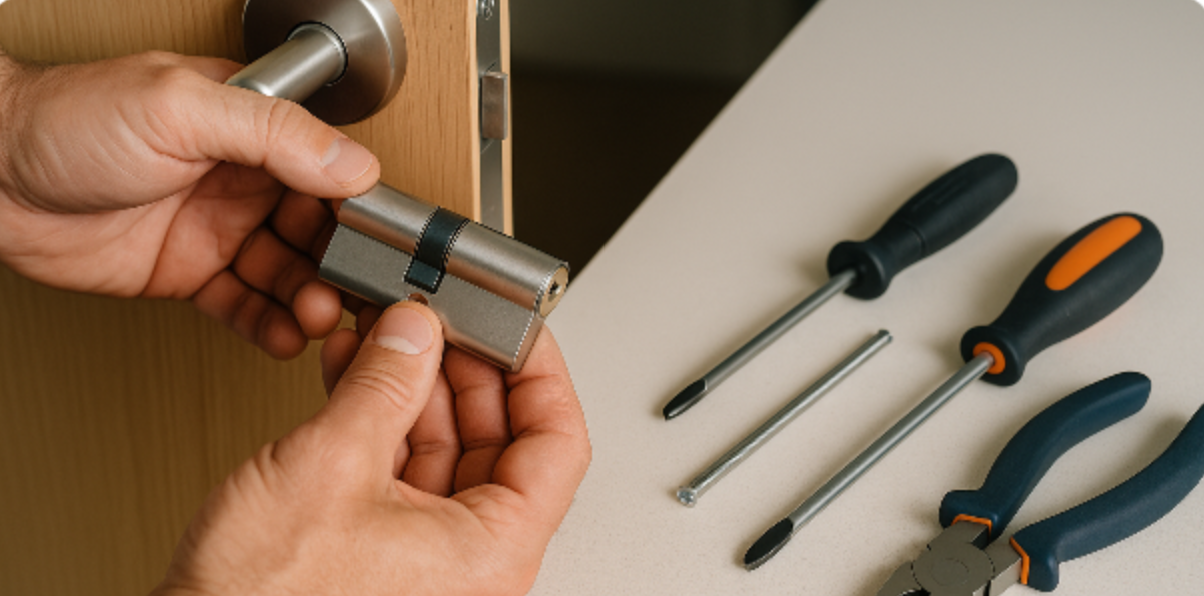
Euro cylinders are common on uPVC, composite and some timber doors. Size and security level matter, and a sticking cylinder can sometimes point to a wider alignment issue.
Night latches and other surface-mounted locks are still common on flats and side doors. A change may involve the lock body, the cylinder or both.
These run the length of the door edge and lock at several points. If the strip or gearbox has failed, changing only the cylinder may not solve the real problem.
Standards and cost
BS 3621 is a British Standard that often matters for timber entrance doors because many insurers refer to it when they describe acceptable front door security. On uPVC and composite doors, the equivalent conversation is usually about the quality of the cylinder and whether the whole mechanism is working as it should.
Repair can make sense when the lock body is sound and the fault is limited to adjustment or a worn part. Replacement is often the cleaner option after key loss, a tenancy change, a snapped key or obvious internal wear. Cost depends on the lock type, whether one or several locks need changing, whether the door needs realignment and whether extra parts are needed once the old lock is removed.
Garage door section
Garage door locks fail in their own ways, and they are worth checking properly because many are linked to handles, rods or internal bars rather than a simple front-facing cylinder alone.
These often suffer from worn T-handles, seized barrels or bent rods that stop the locking points retracting cleanly.
Locks on manual roller doors can fail through heavy use, corrosion or distortion around the base rail. The issue may be the barrel, the lock housing or the way the door is travelling.
These commonly use mortice, rim or hasp-style arrangements. Replacement needs to match the door thickness, the rebate and the way both leaves meet.
A garage door that will not lock should be treated as a security issue, but the right fix depends on the door type and how the original locking setup was built.
Common questions
A full change usually makes more sense after lost keys, a move, a tenancy change, visible wear or when the existing lock no longer meets the level of security you want.
BS 3621 is a British Standard often referenced by home insurers for key-operated mortice and rim locks. It is a useful benchmark when you want a lock that meets a recognised security standard.
Yes. Up-and-over, roller and side-hinged garage doors can all suffer from worn cylinders, bent linkages, failed handles or seized lock barrels that need replacement or adjustment.
The main factors are the lock type, the number of locks, whether the door needs adjustment, whether British Standard hardware is required and whether extra parts are needed because the mechanism has failed as well.
Request help
Tell us what lock you have and whether the issue is urgent.
Related services