Cylinder
If the key sticks, spins or has snapped, the cylinder may be the main fault. Size and anti-snap specification both matter when choosing the replacement.
UPVC door lock replacement
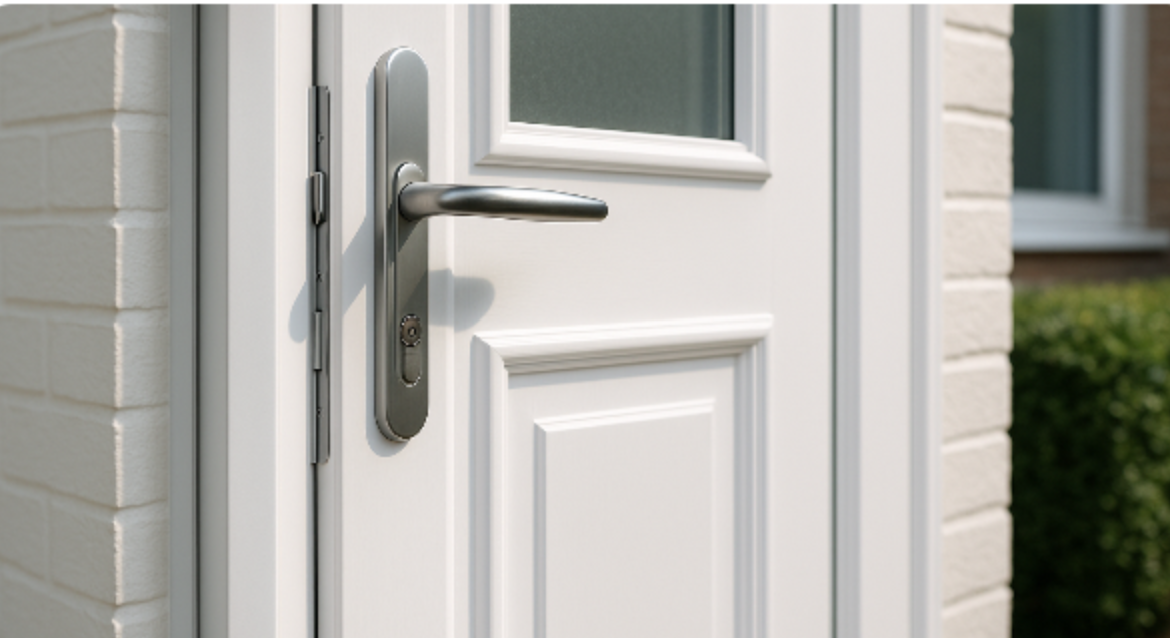
UPVC and composite entrance doors are common across newer Chelmsford estates and on many houses updated over the past twenty years. Around Springfield and the newer roads heading out towards Beaulieu, a failed handle or key that turns badly is often not just a simple cylinder change. It can point to a worn gearbox, a tired centre case or a door that has dropped enough for the keeps to bind. The right fix starts with diagnosis, not with replacing parts blindly.
Common failure points
If the key sticks, spins or has snapped, the cylinder may be the main fault. Size and anti-snap specification both matter when choosing the replacement.
This is the central part of the multipoint mechanism. If the handle feels loose or the latch will not retract properly, the gearbox is often the first part to inspect.
Wear in the centre case or strip can stop the hooks and rollers travelling correctly. On older systems, matching the profile is as important as fitting the part.
A dropped door can make a healthy lock feel broken. If the keeps are out of line, forcing the handle only adds strain and shortens the life of the mechanism.
Repair or replace
A UPVC mechanism often lasts around 8 to 12 years before wear in the gearbox or centre case becomes hard to ignore. That is why the first check is whether the issue is a single failed part, a door alignment problem, or a mechanism that has reached the point where replacement is the better use of money.
Repair can be the sensible route if the lock strip is still available and the rest of the hardware is sound. Replacement is more likely when parts are obsolete, the mechanism has multiple worn points or the cylinder no longer offers the level of security you want.
Where standards matter, BS EN 1670 is relevant to corrosion resistance and durability of building hardware, while PAS 24 is a recognised security benchmark for doorsets. Those standards are part of the conversation when a replacement needs to balance fit, lifespan and security.
Replacement process
The door is checked closed and open to see whether the problem changes under pressure. The old cylinder or mechanism is measured, the strip profile is compared if needed and the replacement part is fitted and tested through a full lock cycle. The final check matters: the door should lift, latch and deadlock smoothly without needing force on the handle.
If the problem is a full mechanism failure during a lockout, that may overlap with the emergency work described on the lockouts page. If the door opens but locks poorly, a planned replacement is often enough.
Common questions
The common failure points are the cylinder, gearbox, centre case, handles and keeps. A stiff key or floppy handle can point to one part, but the door should be checked as a whole before deciding what to replace.
A typical UPVC multipoint mechanism often lasts around 8 to 12 years, although alignment issues, heavy use and weather exposure can shorten that lifespan.
Yes. BS EN 1670 relates to corrosion resistance and durability of building hardware, while PAS 24 is a common benchmark used when doorsets are tested for security performance.
Often yes. If the problem is limited to the cylinder, handle set, keeps or gearbox, repair or partial replacement may be enough. Full replacement is more likely if the strip is obsolete, badly worn or the door itself is distorted.
Request help
Tell us what the handle, key and door are doing now.
Related services